Intuitive Psychic Reading
The Words That Can Kill a Love Reading
Learn how certain ways of phrasing your questions can sabotage a love reading — and how to ask in a way that opens intuition instead of closing it.

One November evening, a woman calls MystiCall. Her voice trembles as she asks: “He’s coming back, isn’t he?” Hidden inside that seemingly simple question is a powerful trap — the kind that can turn an illuminating reading into a conversation where nobody is really listening.
At MystiCall, we believe words carry power. They shape the energy of a reading, influence intuitive connection, and can determine whether you leave with clarity or even more confusion. Some phrases act like energetic saboteurs. They close the door before it has even opened.
Questions that close instead of opening
The “isn’t he?” trap
“We’re going to get back together, aren’t we?”
It sounds like a question, but it is really asking for confirmation. The “aren’t we?” exposes the anxiety underneath: you do not want to know — you want reassurance. Energetically, it is like trying to pressure the cards into agreeing with you.
When a question arrives loaded with expectation, it no longer invites exploration. It demands a yes. The reader is cornered: either they tell you what you want to hear and betray the reading, or they disagree and risk being rejected.
In our consultations, we recognize these questions immediately. They carry a different charge. You can feel the desperation of someone who can no longer tolerate uncertainty.
Hidden assumptions that poison the question
“What do I need to do to make him come back?”
It sounds constructive, but it contains a subtle poison: it assumes the other person should come back. And that you can — or must — do something to force that return.
That phrasing exposes a harmful belief: that love can be won through strategy. It turns guidance into a manipulation manual. Worse, it places you in a state of active waiting — the modern torture of exhausting yourself trying to control what cannot be controlled.
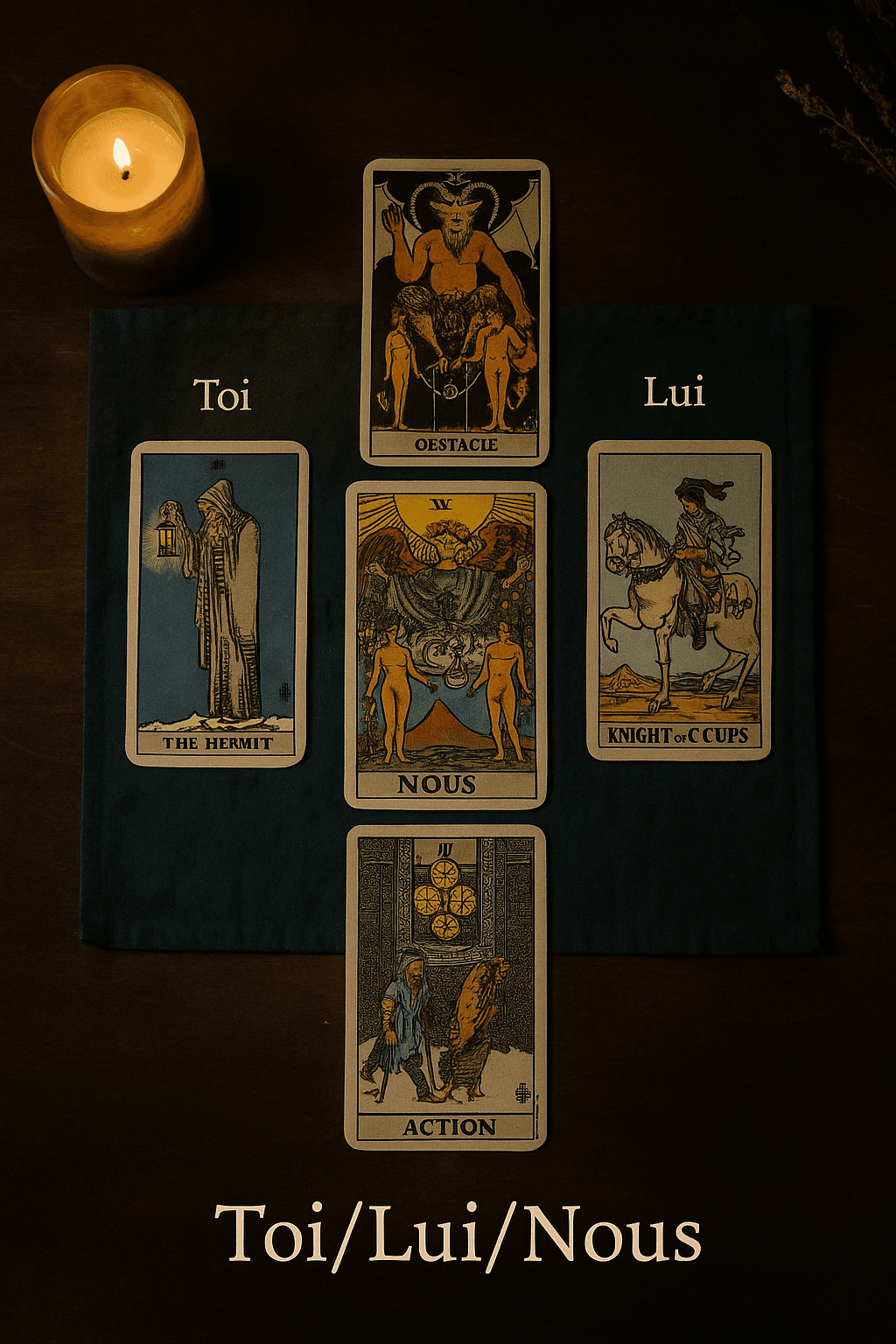
In a reading, this kind of question often reflects an obsession with control. The Devil may appear — the card of destructive attachment, of chains we help create ourselves.
The problem with surveillance questions
Trying to read someone else’s mind
“Is he cheating on me right now?”
This crosses an ethical line. It asks the reader to invade the inner life of a third person. Beyond the moral issue, it reveals something about your own state: you are being consumed by doubt.
And that anxiety can color the entire reading. Even if the cards feel reassuring, the suspicion may remain. Even if they point somewhere else, you may only hear whatever confirms the fear.
At MystiCall, we have learned to recognize these poisoned requests. They often contain their own answer — just not the one the caller expects.
Fatalistic phrases that sabotage the reading
Despair disguised as a question
“I must be cursed in love, right?”
At that point, you are no longer asking for guidance. You are asking for validation of your misery. The sentence turns the reader into an accomplice in your own self-destruction.
Energetically, declaring yourself “cursed” sends a message of total resignation. Psychologically, it can train the subconscious to expect failure. Words can become powerful scripts.
In our readings, The Moon often appears around declarations like these — the archetype of illusion and self-feeding fear. As if the cards were reflecting your own distorted vision back to you.
Addiction to multiple predictions
Divination shopping
“Several psychics told me he would come back. Why hasn’t it happened yet?”
The sentence sounds almost like a complaint. It turns divination into customer service for hope. You collect predictions the way someone else might collect remedies, hoping the next dose finally works.
The problem? You may have put your life on pause. Instead of living, you are waiting for a prophecy to prove itself. You become a spectator in your own story.
That posture kills the purpose of guidance. Every new reading becomes a referendum on the previous one. The energy gets muddy. Messages begin contradicting each other. It makes sense: you are no longer searching for truth. You are searching for confirmation.
Words that close down the future
When you refuse to hear
“I only want to hear positive things. Spare me the rest.”
It sounds understandable — nobody wants pain. But it fundamentally sabotages the reading. It asks the reader to soften, omit, or distort.
A meaningful reading contains both shadow and light. Asking for “positive only” is asking for half a truth. It is like reading a book while skipping every difficult chapter.
In our practice at MystiCall, we know this kind of caller often leaves disappointed. They may receive comfort, but not clarity. A few weeks later, they are still stuck in the same place.
The energetic dimension of language
How a question can contaminate a reading
Divination tools are traditionally considered sensitive to intention and emotional charge. A question soaked in fear may draw anxious symbolism. A request shaped by obsession may pull attention toward themes of attachment and control.
That is why, at MystiCall, we care so much about the way a question is asked. Your first words set the tone of the session. They initialize the emotional “program” of the reading.
A cleaner question — neutral, open, respectful — creates more room for deeper messages to emerge. A biased formulation can create interference and blur intuitive interpretation.
The art of asking well
Toward a more illuminating consultation
If you want to change the quality of your love readings, begin with your questions. Look for the hidden “isn’t he?”, the embedded assumptions, the requests for reassurance disguised as curiosity.
Replace “He’s coming back, isn’t he?” with “What do I need to understand about this relationship?” Turn “What do I do to make her love me?” into “How can I move through this situation in a healthier way?”
Those changes matter. They move you from passive waiting into active exploration. They open the reading instead of closing it.
Conclusion: the power of the right words in a reading
In our consultations, the difference is immediate. People who arrive with open, neutral, respectful questions often leave with more perspective. Those who cling to loaded wording keep circling the same issue.
Divination is not a vending machine for custom-made dreams. It is a mirror, a bridge toward your own intuition. But a mirror can only reflect what you are willing to look at.
At MystiCall, we do not treat words as accidental. Every sentence you speak shapes the way you frame your reality. Choose those sentences with the care they deserve. Your love life may be clearer for it.
MystiCall content is created for entertainment and reflection. It is not factual prediction or professional advice.
GO DEEPER
Want to talk it through?
Your guide is here whenever a question feels more personal than an article can answer.